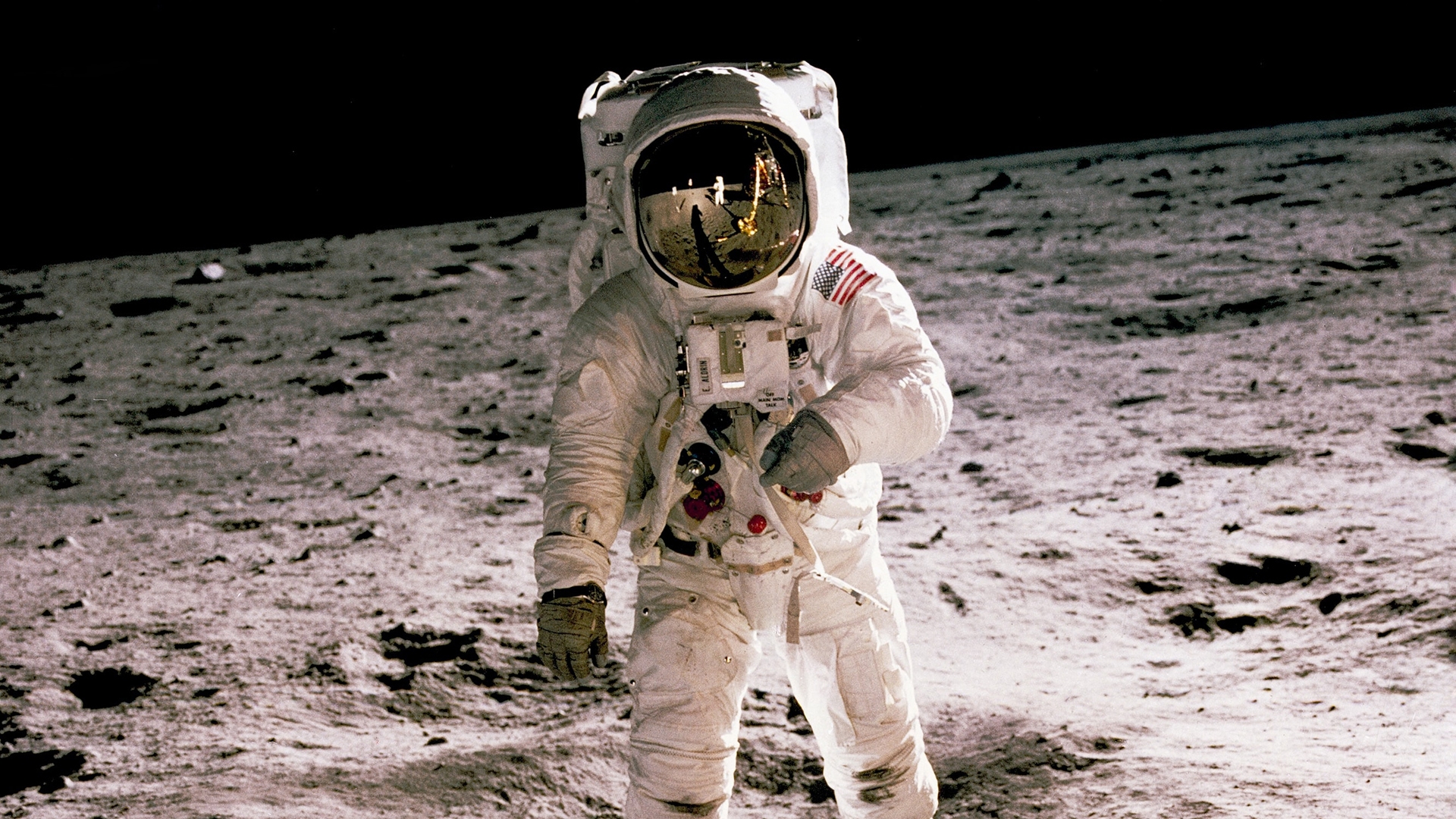
Photo by History in HD on Unsplash
Bringing the Moon to your Living Room.
How 14-year-old Philo Farnsworth tinkered his way to the technology that broadcast the moon landing.
By The Foundation for a Better Life
14-year-old Philo Farnsworth wasn’t looking up at the sky while plowing the field at his father’s farm in Rigby, Idaho. He was looking down at the straight furrows that coursed over the earth.
That’s when he had an epiphany: The same way the plow went back and forth over the field, an image could be scanned electronically and then transmitted line by line, much like furrows in a field. It was a vision of the first transmittable TV image.
Philo was a curious boy and was often lost in thought. When he was 12 years old, he was delighted to find that the farmhouse his family moved into was wired with electricity. He also discovered other treasures in the house: a cache of electronics magazines, a burned-out electric motor, and plenty of bits and pieces to tinker with.
He fixed the motor and converted his mother’s hand-powered washing machine into an electric-powered one. At 14, he showed his high school teacher a handful of sketches of an electronic television system inspired by the furrows in the field. Encouraged by his science teacher, Philo covered several blackboards with diagrams.
Then Philo’s father died when he was in high school. Philo went to work supporting his siblings and mother while keeping up his studies. He started a radio repair business; it failed. He briefly attended college, but his mind was on television, and so he dropped out and began looking for somebody to fund his ideas. That opportunity came, and he traveled to Berkeley, California, with his new bride Pem to set up shop together.
The TV tube Philo developed would become the standard in broadcasting. Yet Philo Farnsworth spent years defending his patent and rebuilding his business after an economic crash.
The years had been turbulent. Like all of us, he had his share of challenges, perhaps more. But he kept pushing forward and registered hundreds of patents. Finally, on July 21, 1969, Neil Armstrong stepped out of Apollo 11 onto the moon’s surface in an area called the Sea of Tranquility.
Philo Farnsworth was sitting in his living room with his wife Pem, watching the live feed — the image transmitting quickly, row by row like the furrows in a field. He turned to her and said: “Pem, this has made it all worthwhile.”
Dream Big... PassItOn.com®
Copyright ©2022 The Foundation for a Better Life. All rights reserved. Available under a Creative Commons Attribution NonCommercial-NoDerivatives 4.0 License (international): https://creativecommons.org/licenses/by-nc-nd/4.0/

The Foundation for a Better Life, a 501(c)(3) non-profit organization, gives your newspaper permission to publish these stories in print and electronic media (excluding audio and video), provided the stories are published in their entirety, without modification and including the copyright notice. For any modification, permission must first be obtained from the Foundation by emailing media-relations@passiton.com. Thank you.
We add new stories each month. If you'd like to be notified when we publish new stories, enter your information below.