The Foundation for a Better Life
The Longest Race.
How Major Taylor, the world’s fastest cyclist, pushed against prejudice to become a champion of the sport, and of fairness and goodwill.
By The Foundation for a Better Life
Marshall “Major” Taylor was the son of a Black Civil War veteran who fought for the emancipation of enslaved people. As a young boy, he was befriended by the son of his father’s employer and the two spent time reading and studying together and riding bicycles.
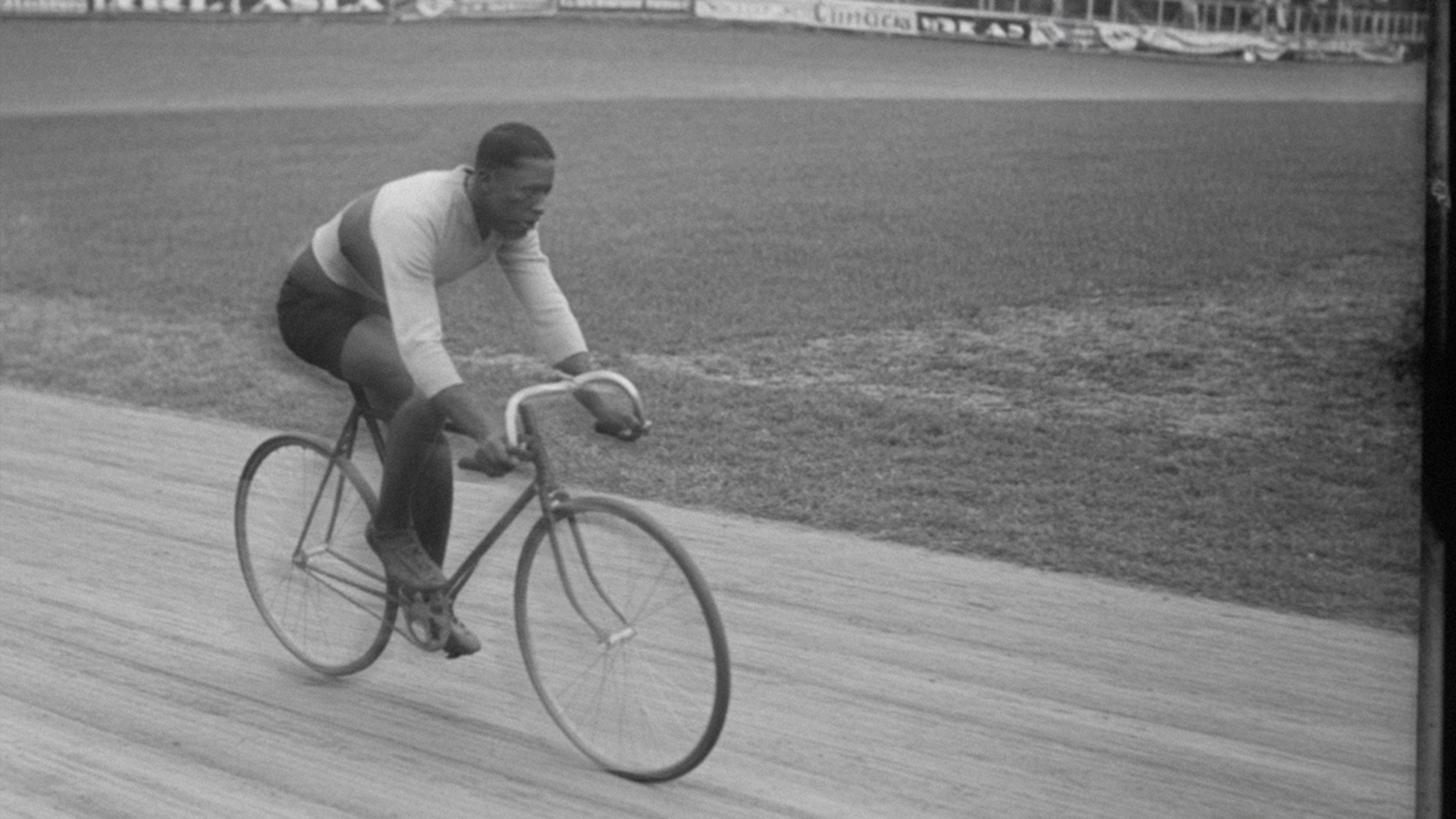
To Taylor, as an 8-year-old boy, the freedom, speed and risk of crashing provided a great rush of excitement. His love of the human-powered machine led him to work at a bicycle shop as a young man. Upon seeing his skill on the two-wheeler, his employer hired Taylor to perform stunts in front of the shop to draw customers in. At age 14, he began racing, and at 15, he was beating the world’s best riders.
With the loss of the Civil War still fresh in the minds of many Southern sympathizers, seeing a Black man dominate opened the wounds of their failed ideology. Competitors, race organizers and bicycle clubs taunted him during races, excluded him from competitions and teamed up to box him in during races to prohibit him from bursting out from the pack to take the lead.
But Taylor had a fortitude and a fight handed down to him from his father. He pushed through, never retaliating, yet always looking for a way to win. And win he did. Taylor earned seven world records. He competed around the world and coast to coast in both the United States and Canada. He traveled to Europe, where he became a sensation as the only Black professional cyclist. And although racial prejudice was still very much a part of his life, Taylor coped with it by winning. He earned the nickname “The Black Cyclone” and earned a fan in President Theodore Roosevelt, who followed the career of the boy who was determined to pedal past any barrier to gain a victory.
Encouraging young fans wherever he went, and adhering to a high moral code, made Taylor a major influence in sports – from Brooklyn to Paris, from Worcester, Massachusetts, to Montreal, Quebec, the muscular rider was breaking all kinds of barriers. Newspapers of the time reported of his European tour: “Everywhere he went he was mobbed, talked about or written up.”
However, the grueling schedule took its toll, and Taylor returned home to take a hiatus. In 1902, he had won 42 races out of 50, an extraordinary amount of output in a single year. He was understandably physically and emotionally spent. After more than two years recuperating, he returned to France and set two new world records. Then, at age 32, he retired, saying that “age was creeping up on him.”
Retirement years were not good to Taylor. He invested the money he earned in a stock market that would bottom out in the Great Depression. Bad investments, unscrupulous investors, a waning sport and a world economy in reset left him with nothing more than good memories.
But through the prejudice, the world’s worst financial meltdown and an aging body, Taylor was still winning smiles. He counseled young people to “practice clean living, fair play and good sportsmanship.”
After losing so much, he refused to be bitter. As one of the most dominant athletes of his era, and among the most persecuted, he maintained his dignity. When he died suddenly of a heart attack at age 53, his body was claimed by a group of former professional cyclists and buried in a prominent cemetery, with funds donated by Frank W. Schwinn.
Taylor’s headstone reads: “World’s champion bicycle racer who came up the hard way without hatred in his heart; an honest, courageous and God-fearing, clean-living gentlemanly athlete. A credit to his race who always gave out his best. Gone but not forgotten.”
Determination… PassItOn.com®
Copyright ©2025 The Foundation for a Better Life. All rights reserved. Available under a Creative Commons Attribution NonCommercial-NoDerivatives 4.0 License (international): https://creativecommons.org/licenses/by-nc-nd/4.0/

The Foundation for a Better Life, a 501(c)(3) non-profit organization, gives your newspaper permission to publish these stories in print and electronic media (excluding audio and video), provided the stories are published in their entirety, without modification and including the copyright notice. For any modification, permission must first be obtained from the Foundation by emailing media-relations@passiton.com. Thank you.
We add new stories each month. If you'd like to be notified when we publish new stories, enter your information below.