Photo by The New York Public Library on Unsplash
Grapes of Wrath: The Life of John Steinbeck.
Troubled by the world’s social injustices and deeply devoted to his sons, John Steinbeck used the paradox of good and evil as a catalyst for creativity and a motivator for change.
By The Foundation for a Better Life
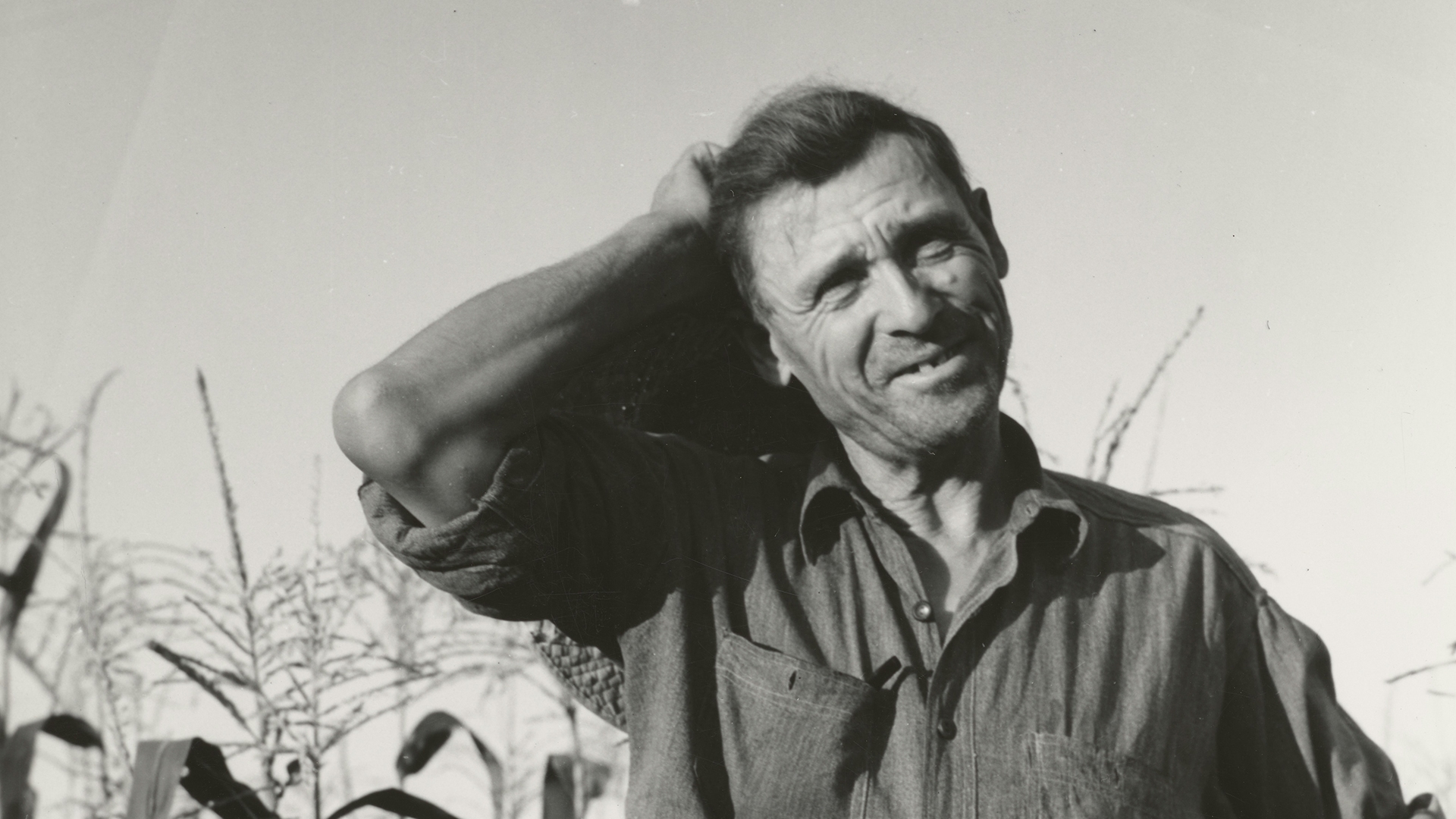
The defining work of John Steinbeck is “The Grapes of Wrath,” a Pulitzer Prize–winning novel that tracks a distressed family’s migration to California during the Dust Bowl. Steinbeck published his opus in 1939, having written it as a 37-year-old eyewitness to the devastation that stemmed from over-farming and exaggerated promises, leading desperate farmers to California.
Steinbeck was born in Salinas, California, and knew firsthand the toll endless labor took on people’s physical well-being as well as their psyches. In the novel, the migration of the Joad family captures not only the oppression of the times, but the small acts of compassion people are capable of even when they have lost everything. It is a reflection on the country as it learned to cope with growth, the management of resources and its impending role in world conflicts. Steinbeck captured both humans’ resilience and his characters’ undaunted belief in a future worth fighting for.
Steinbeck’s life was equally conflicted. He struggled with his marriage and alcoholism, yet he took the time to start each day with a letter to his two sons. He was sensitive to the world around him and the relationship of all living things and how they affected each of us. As the Joad family moves west, readers see their perspective change from one focused on the individual to one focused on the good of all. This sense of community is what Steinbeck believed in — that to build a better future, we must build it together. To his son Thom he wrote: “[Love] can release in you strength, and courage and goodness and even wisdom you didn’t know you had.”
In his novella “Of Mice and Men,” Steinbeck exposes us to the tragic fate of two ranch hands, one wholly dependent on the other. It is a sharp commentary on our obligation to those members of our community who have less capacity and fewer opportunities than the rest of us. The tenderness in the face of a brutal reality should inspire us to greater acts of compassion. And this is what John Steinbeck did best: He held up a mirror to the society he lived in, as if to say, “We can do better.”
Sometimes, the best way to create a better world is to write about the one we live in, to show all the desperation of living, yet in the midst, reveal the resilience of compassion. Even though Steinbeck’s stories reveal the harsh reality of loss and grief, they leave us feeling the need to fight for those things that are most dear to us.
See A Better World… PassItOn.com®
Copyright ©2026 The Foundation for a Better Life. All rights reserved. Available under a Creative Commons Attribution NonCommercial-NoDerivatives 4.0 License (international): https://creativecommons.org/licenses/by-nc-nd/4.0/

The Foundation for a Better Life, a 501(c)(3) non-profit organization, gives your newspaper permission to publish these stories in print and electronic media (excluding audio and video), provided the stories are published in their entirety, without modification and including the copyright notice. For any modification, permission must first be obtained from the Foundation by emailing media-relations@passiton.com. Thank you.
We add new stories each month. If you'd like to be notified when we publish new stories, enter your information below.