The Foundation for a Better Life
Small Adjustments Make the Biggest Difference.
Inside Team USA’s Gold-Medal Run at the 2026 World Championships.
By The Foundation for a Better Life
In September 2026, the global capital of wheelchair basketball shifted to Ottawa, Canada, where Carleton University and the TD Place Arena played host to the landmark 2026 IWBF World Championships. For the first time, the men’s and women’s world tournaments ran concurrently, spotlighting the peak of elite adaptive athletics.
Among the standout storylines was the gritty campaign mounted by the U.S. Women’s National Wheelchair Basketball Team – a journey defined by tactical adjustments. Basketball is a game that depends more on the players without the ball than the player with the ball. Getting open, creating space and putting players in the best spot to shoot uncontested shots gives you the best chance to win. And disrupting the flow of your opponent is equally important. Team USA made small adjustments all season long, paying close attention to the details of their attack and their defensive positioning.
The 2026 World Championships featured a gold-medal final between the United States and host nation Canada. Team USA found themselves on their heels after Canada’s Arinn Young dropped 15 of Canada’s 27 first-quarter points early on. Rather than panic, Team USA made vital defensive adjustments, tweaking the positioning of their chairs to cut off passing lanes and stifle Canada’s momentum.
“It was a tough first quarter,” American star Lindsey Zurbrugg reflected after the game. “Mad respect to Canada. I think we made some really good adjustments after that. I think like tiny adjustments of our chairs was the defensive edge we needed.”
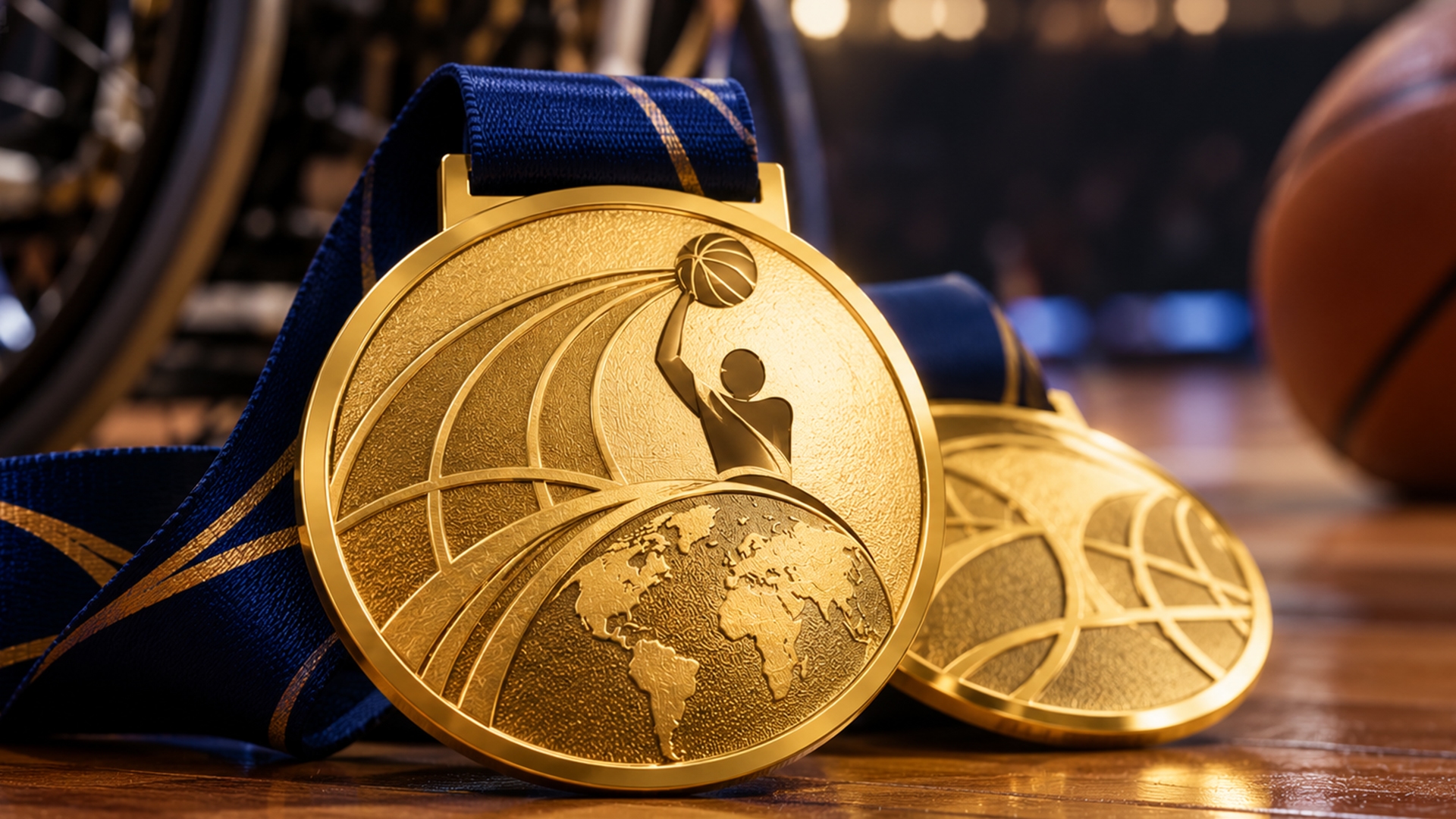
Zurbrugg anchored the U.S. attack with a team-high 26 points, seven assists and two rebounds. Through 14 intense lead changes, the game hung in the balance well into the fourth quarter. Team USA managed to carve out a 71-64 cushion with three minutes remaining and weathered a frantic Canadian surge to seal a breathtaking 77-76 victory and capture the world crown.
“We’ve shown that in a few different games,” U.S. women’s team head coach Jeremy Lade said after the game. “We’ve shown the ability to score on offense and get the stops on defense. We made mistakes today, but we built enough character to be able to bounce back from mistakes.”
Bouncing back captures the essence of wheelchair basketball culture. From grassroots development pipelines like the NWBA to the apex stage in Ottawa, success isn’t built by a single superstar, but by a 12-player roster all working together.
As the confetti fell at TD Place, Team USA’s gold-medal triumph cemented a historic chapter for the program, proving that when the pressure mounts, the greatest play you can make is trusting the teammate beside you.
Teamwork… PassItOn.com®
Copyright ©2026 The Foundation for a Better Life. All rights reserved. Available under a Creative Commons Attribution NonCommercial-NoDerivatives 4.0 License (international): https://creativecommons.org/licenses/by-nc-nd/4.0/

The Foundation for a Better Life, a 501(c)(3) non-profit organization, gives your newspaper permission to publish these stories in print and electronic media (excluding audio and video), provided the stories are published in their entirety, without modification and including the copyright notice. For any modification, permission must first be obtained from the Foundation by emailing media-relations@passiton.com. Thank you.
We add new stories each month. If you'd like to be notified when we publish new stories, enter your information below.