Photo by Catherine Kerr on Unsplash
Building Bridges.
Polish immigrant Ralph Modjeski is widely known among civil engineers as America’s greatest bridge builder. His approach to solving unsolvable building challenges is a lesson for all of us.
By The Foundation for a Better Life
There is a reason why bridge builders have become legendary, pushing the very term “bridge building” into our lexicon. Where we see a wide gulf, with water below and steep cliffs seemingly preventing any type of structure from spanning the distance, bridge builders see a solution.
The great peace negotiators take their cues from builders of physical bridges, using tried-and-tested techniques to forge connections and strengthen bonds. Think of Abraham Lincoln negotiating with Confederate leaders. Franklin Roosevelt crafting the New Deal that put hundreds of thousands of Americans back to work. Henry Kissinger negotiating the end of the Vietnam War before it engulfed a good part of the world. Great negotiators and bridge builders use the same tactics.
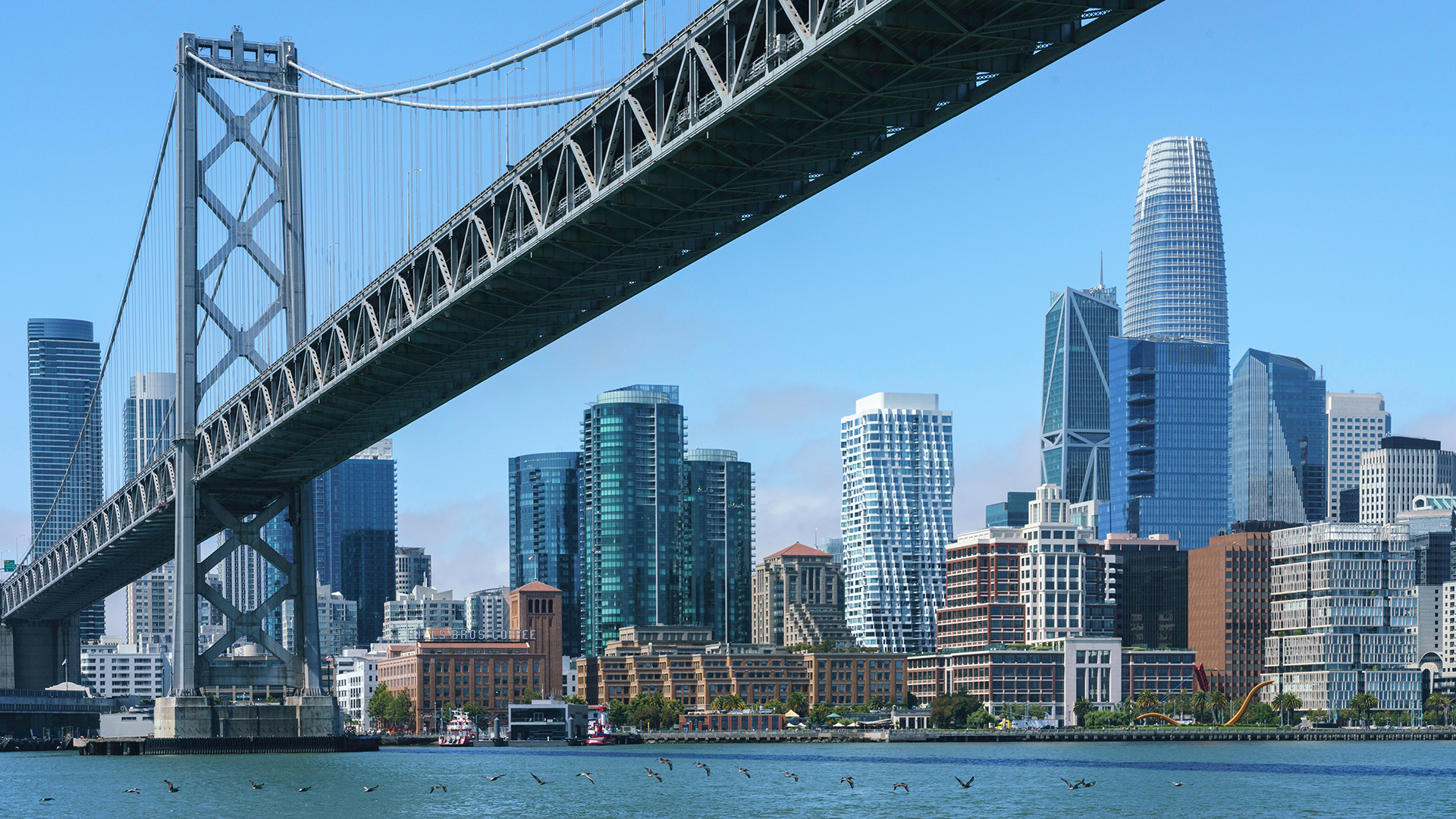
First, respect your opponent. In the case of bridge building, that is the terrain. Ralph Modjeski designed the San Francisco-Oakland Bay Bridge. The bay was 100 feet deep, and the seafloor was blanketed in thick, soft mud. It was unstable and thought to be impossible to hold piers. So Ralph invented a new way. He designed enormous caissons, similar to diving bells — an inverted pot that could be lowered all the way to the seafloor, where water and mud were pumped out until workers reached bedrock. Massive structures were then attached directly to the solid surface.
Second, the solution must be sustainable for generations. Peace deals require both sides to win something. Bridge building requires engineering to stand the test of time. Political climates can beat down on agreements. Waves will crash against the foundation of a bridge. The materials must have staying power. On top of its solid-rock foundation, the Bay Bridge hosts a dual-suspension system and a massive cantilever truss.
Why two different systems in one bridge? Because Modjeski knew well the principle of finding an ally, which is the third principle in negotiations. You cannot close a deal without creating allies and removing the threat of failure for any party in the negotiation. For Modjeski, the ally was Yerba Buena Island, a natural halfway anchor. Two systems, each approaching from opposite directions, converge at the island. A tunnel was bored right through the middle. This middle anchor had to withstand imbalance and anchor an enormous concrete block to keep the two sides together — an ally to both.
Lastly, a good bridge will handle future and unseen demands. For the Bay Bridge, this meant fast-moving passenger cars as well as slow-moving heavy trucks and commuter trains. The design is simple and elegant: an upper deck for cars and a lower deck for heavy trucks and trains.
The Bay Bridge stands as a monument to ingenuity. But it also serves as a reminder that bridge building is the art of bringing two people or parties together that once seemed impossible.
Build A Bridge… PassItOn.com®
Copyright ©2026 The Foundation for a Better Life. All rights reserved. Available under a Creative Commons Attribution NonCommercial-NoDerivatives 4.0 License (international): https://creativecommons.org/licenses/by-nc-nd/4.0/

The Foundation for a Better Life, a 501(c)(3) non-profit organization, gives your newspaper permission to publish these stories in print and electronic media (excluding audio and video), provided the stories are published in their entirety, without modification and including the copyright notice. For any modification, permission must first be obtained from the Foundation by emailing media-relations@passiton.com. Thank you.
We add new stories each month. If you'd like to be notified when we publish new stories, enter your information below.