The Foundation for a Better Life
The Girl Who Outran Her Limitations.
After a bout with polio at age 4, Wilma Rudolph was told she would never be able to run. She became the first American woman to win three gold medals in a single Olympic Games.
By The Foundation for a Better Life
In the American South of the 1940s, a 4-pound premature baby already faced an uphill battle. For Wilma Rudolph, the hill became a mountain when she contracted polio at age 4. The disease paralyzed her left leg, forcing her into a heavy metal brace.
But for Rudolph’s mother, the disease that was crippling thousands of children around the world was just another obstacle to overcome. Every week, she drove Rudolph 50 miles to a Nashville hospital for treatments. Every night, her family took turns massaging Rudolph’s weakened leg. Rudolph watched the other children sprint and play in the red Clarksville dirt, harboring a quiet, burning determination. By age 9, she did the unthinkable: she took off the brace and took her first unassisted steps. By 11, she was playing basketball in the backyard. She wasn't just walking; she was trying to catch up to the world.
Rudolph’s natural speed soon rocketed her past her teammates. In high school, she became a basketball star, catching the eye of Ed Temple, the track coach at Tennessee State University. He saw in Rudolph a rare mix of fluid grace and raw power. Under his mentorship, she blossomed. At just 16 years old, she qualified for the 1956 Melbourne Olympics, bringing home a bronze medal in the relay.
But Rudolph wasn't satisfied with bronze. She wanted to prove that her past didn't define her future. She came home and went to work.
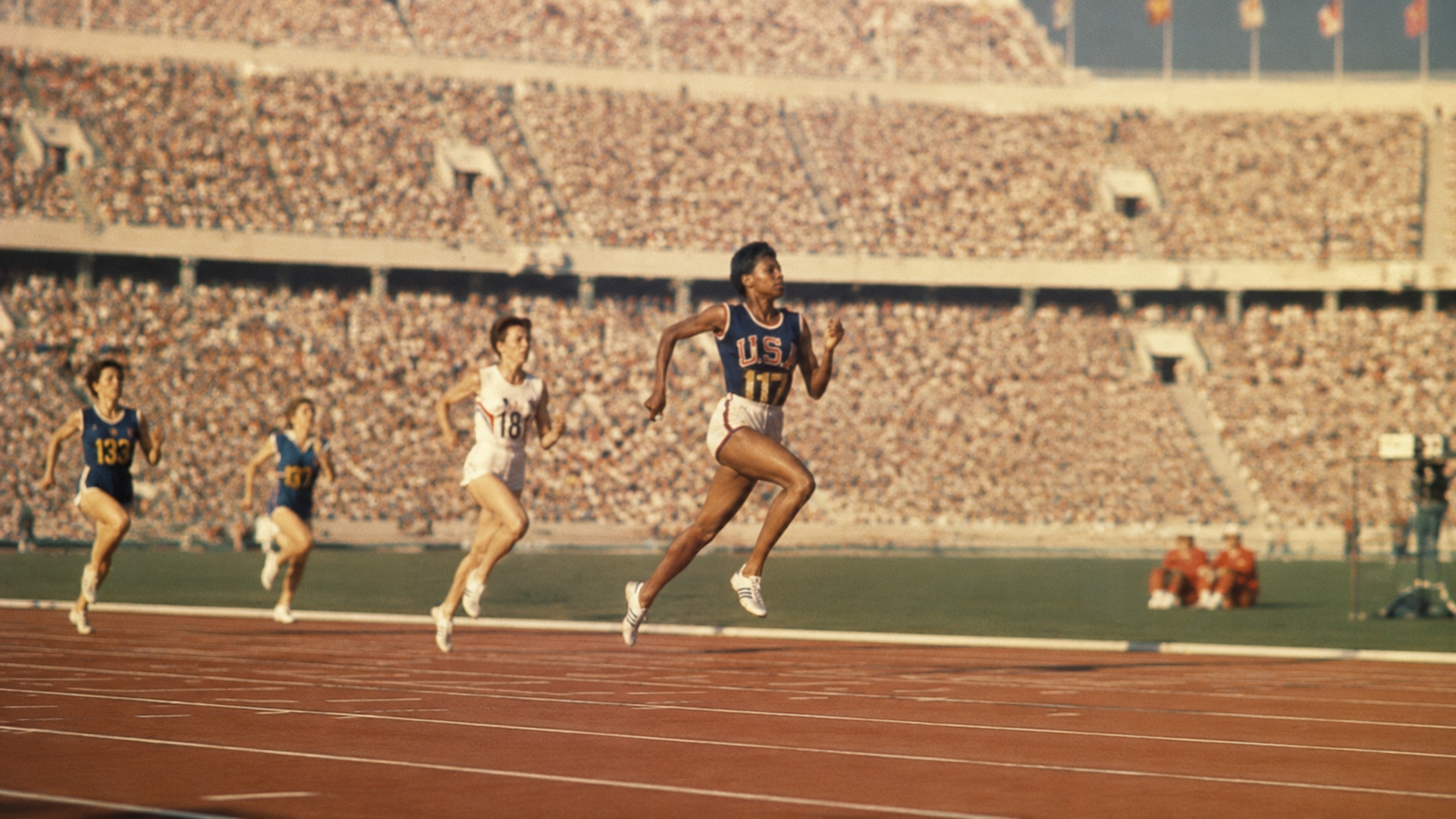
The 1960 Olympic Games in Rome belonged to Rudolph. Standing at 5'11", with a stride so smooth the French called her "The Black Gazelle," she captivated the globe.
Despite twisting her ankle just days before the competition, Rudolph lined up for the 100-meter dash. When the gun fired, she exploded off the blocks, tying the world record and capturing the gold.
Days later, she blew away the competition in the 200-meter dash, securing her second gold. Her crowning moment came during the 4x100-meter relay. When Rudolph received the baton for the anchor leg, her team was trailing. With a burst of speed that seemed almost superhuman, she chased down her opponents, crossing the finish line to make history. In doing so, Rudolph became the first American woman to win three gold medals in a single Olympic Games.
Rudolph retired from running at the peak of her career to become a teacher, coach and civil rights champion, dedicating her life to elevating youth in underrepresented communities. She proved that the mind and spirit are far more powerful than any physical limitation.
As Rudolph proved, the obstacles in your path do not determine where you finish; they only test how badly you want to succeed.
Keep Running… PassItOn.com®
Copyright ©2026 The Foundation for a Better Life. All rights reserved. Available under a Creative Commons Attribution NonCommercial-NoDerivatives 4.0 License (international): https://creativecommons.org/licenses/by-nc-nd/4.0/

The Foundation for a Better Life, a 501(c)(3) non-profit organization, gives your newspaper permission to publish these stories in print and electronic media (excluding audio and video), provided the stories are published in their entirety, without modification and including the copyright notice. For any modification, permission must first be obtained from the Foundation by emailing media-relations@passiton.com. Thank you.
We add new stories each month. If you'd like to be notified when we publish new stories, enter your information below.