Photo by The Tampa Bay Estuary Program on Unsplash
Oh, Oyster, Hero of the Ocean.
How the lowly oyster cleans the water, builds reefs and has been feeding us for thousands of years.
By The Foundation for a Better Life
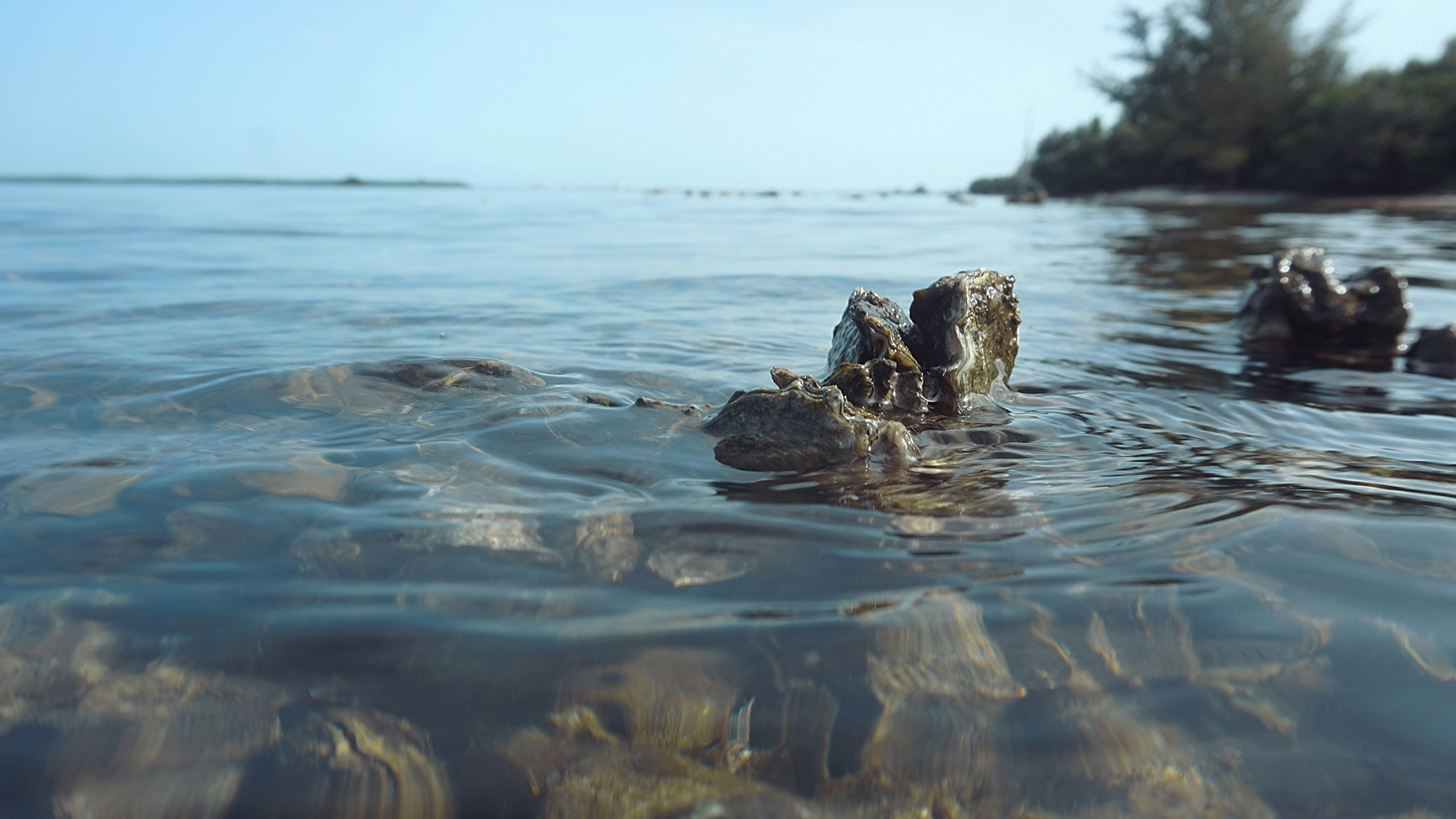
A rocky beach is a picturesque place to stroll, especially if you pause where a freshwater estuary meets the crashing saltwater waves. It is a violent collision; lit by the setting sun, it becomes an almost liquid fire. But beneath the surface, something miraculous is happening. One of Earth’s most ancient creatures is hard at work purifying the water.
A single bivalve — an aquatic mollusk, such as a clam, oyster, mussel or scallop, with a soft body in a hinged, two-part shell — can filter up to 50 gallons of water per day. They draw water into their shells using tiny, hair-like structures called cilia. They pump this water across their gills to capture microscopic algae, nutrients and suspended sediments for food.
Oysters consume excessive nutrients and package what they don't digest into small pellets, depositing them harmlessly onto the riverbed, where microscopic soil bacteria break them down safely. And they do it in enormous communities. By removing excess phytoplankton and suspended solids, oysters prevent toxic algal blooms and significantly improve water clarity. This clear water allows sunlight to penetrate deeper, which is essential for the growth of submerged vegetation like seagrasses. The result is clean water and biodiversity that support fish and crabs.
Oysters also propagate profusely, spreading their shells across rocky shoals and buffering beaches from the onslaught of waves. This prevents erosion and restores fragile shorelines. They are so efficient and so useful that oyster planting — placing juvenile oysters or cured oyster shells in specific locations — has restored long stretches of deteriorating reefs.
Climate change and overharvesting have nearly destroyed enormous colonies of oysters. Beaches have become starker and more polluted. And when erosion washes away the beach, it also impacts the habitats found in fragile ecosystems.
Enter the oyster brigade, a team of volunteers supported by The Nature Conservancy. Each day, they dump shiploads of recycled oyster shells back into locations off the coast of Australia, where the team aims to restore reefs at 60 locations by 2030. These piles of what appears to be rubble become oyster colonies that, in turn, support other marine life and bring back the biodiversity once thought lost.
As Natalia Alekseeva of the UN Environment Programme says, “This initiative shows that when nature is given a helping hand, it can come roaring back, for its own sake and for ours.”
To date, 62 hectares of reefs have been restored in 21 locations. In the restored locations, 250 species of fish and mobile invertebrates such as crabs and sea stars have moved into the oyster neighborhoods. It’s a miraculous comeback story.
The next time you enjoy a seaside stroll along the beach, think about one of the simplest hard workers on the planet: the oyster. Give a shoutout to the work going on just beneath the surface.
Small Things Yield Big Results… PassItOn.com®
Copyright ©2026 The Foundation for a Better Life. All rights reserved. Available under a Creative Commons Attribution NonCommercial-NoDerivatives 4.0 License (international): https://creativecommons.org/licenses/by-nc-nd/4.0/

The Foundation for a Better Life, a 501(c)(3) non-profit organization, gives your newspaper permission to publish these stories in print and electronic media (excluding audio and video), provided the stories are published in their entirety, without modification and including the copyright notice. For any modification, permission must first be obtained from the Foundation by emailing media-relations@passiton.com. Thank you.
We add new stories each month. If you'd like to be notified when we publish new stories, enter your information below.