The Foundation for a Better Life
The Leadership of George Washington.
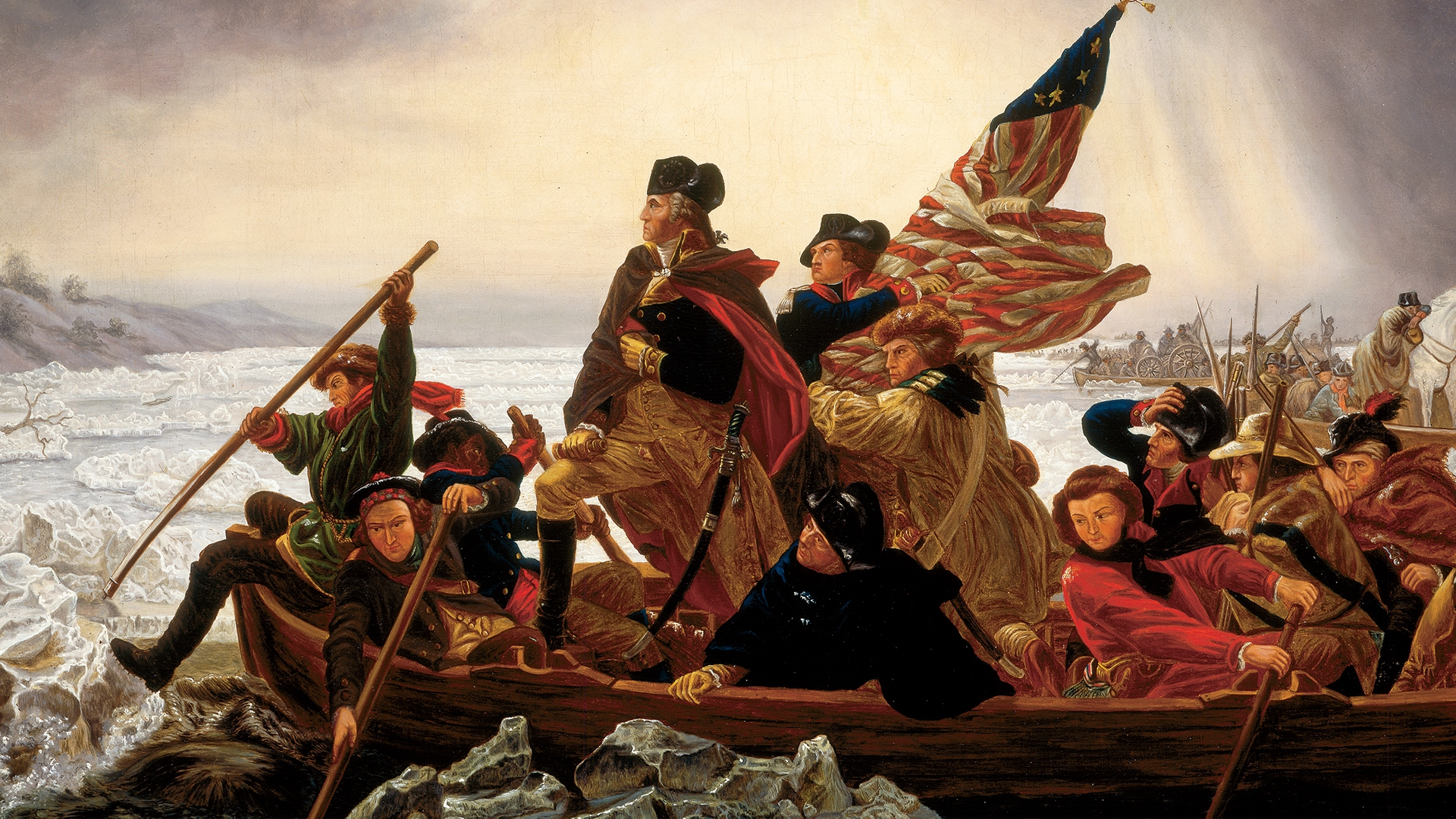
George Washington stayed with his men, suffering the same privations they suffered, setting a course for American democracy.
By The Foundation for a Better Life
At the time of the Revolutionary War, European commanders enjoyed battles at a distant perch. War was like a giant gameboard with leaders safely observing and making commands by day and accommodated at night in the accoutrements one expects while glamping. Territories were fought over in this “gentlemanly” way and later debated in opulent officers’ clubs. The military caste system was strict, and lowly soldiers were, as described in War and Peace merely “cannon fodder.”
George Washington wasn’t fighting for bragging rights, personal honors, or a military inheritance to improve his station in life. He was fighting for the people of a country yet to be formed. He didn’t see soldiers as lowly conscripts to be coerced from battle to battle by rigid discipline and fear. He saw them as fellow countrymen to be led, not driven. He was often seen among them, most famously at Valley Forge when the Continental Army was suffering through a brutal winter. Desertion rates were high and those who remained understood the cause for which they were fighting and persevered. Nearby the encampment was an estate offered to Washington as quarters. He refused. Instead, he was among his men daily, taking inventory of basic needs - shoes, blankets, food – and seeing to their procurement. Of the winter, he wrote: "To see men without clothes to cover their nakedness, without blankets to lay on, without shoes, by which their marches might be traced by the blood from their feet... and submitting to it without a murmur, is a mark of patience and obedience which in my opinion can scarce be paralleled." His firsthand reports to Congress motivated them to allocate more money and resources to the cause.
Washington led from the front, not a faraway perch. During the Battle of Princeton, he famously rode directly into the line of fire, ending up a mere 30 yards from the British lines. His presence rallied fleeing soldiers, visually proving that he would never ask his men to take a risk he wouldn't face himself. With every battle, every traditional military hierarchy dismantled, and every narrow deliverance when failure seemed inevitable, Washington’s reputation grew. He used that reputation to rewrite military conventions. Rather than act as an absolute autocrat, Washington routinely gathered his generals and younger officers for open councils. He listened to their opinions, weighed risks democratically, and built consensus—a practice that kept his leadership adaptable and his army intact.
Washington also knew to whom he was accountable: the elected officials who represented the people in this new experiment called democracy. Rather than act as king, or suggest a monarchy when the war was over, Washington was steadfast in his commitment that the future country belong to the people. This devotion to principle was frustrating as he endured long debates and delays from Congress as they sought consensus while he awaited crucial supplies. But he knew if the Republic was going to survive, it must have checks and balances that address not only the needs and wants of the people, but the objectives of a unifying government: to be ruled by the people.
As we look to leaders past and present, we must look through the eyes of George Washington: patience for human faults, compassion for all, and a clarity for the principles that allow each of us to become the best version of ourselves.
Washington’s enduring vision as a general and as the first President of the United States illuminates the values that inspire us as individuals and bind us as a country.
Leadership… PassItOn.com®
Copyright ©2026 The Foundation for a Better Life. All rights reserved. Available under a Creative Commons Attribution NonCommercial-NoDerivatives 4.0 License (international): https://creativecommons.org/licenses/by-nc-nd/4.0/

The Foundation for a Better Life, a 501(c)(3) non-profit organization, gives your newspaper permission to publish these stories in print and electronic media (excluding audio and video), provided the stories are published in their entirety, without modification and including the copyright notice. For any modification, permission must first be obtained from the Foundation by emailing media-relations@passiton.com. Thank you.
We add new stories each month. If you'd like to be notified when we publish new stories, enter your information below.