The Foundation for a Better Life
Power Up!
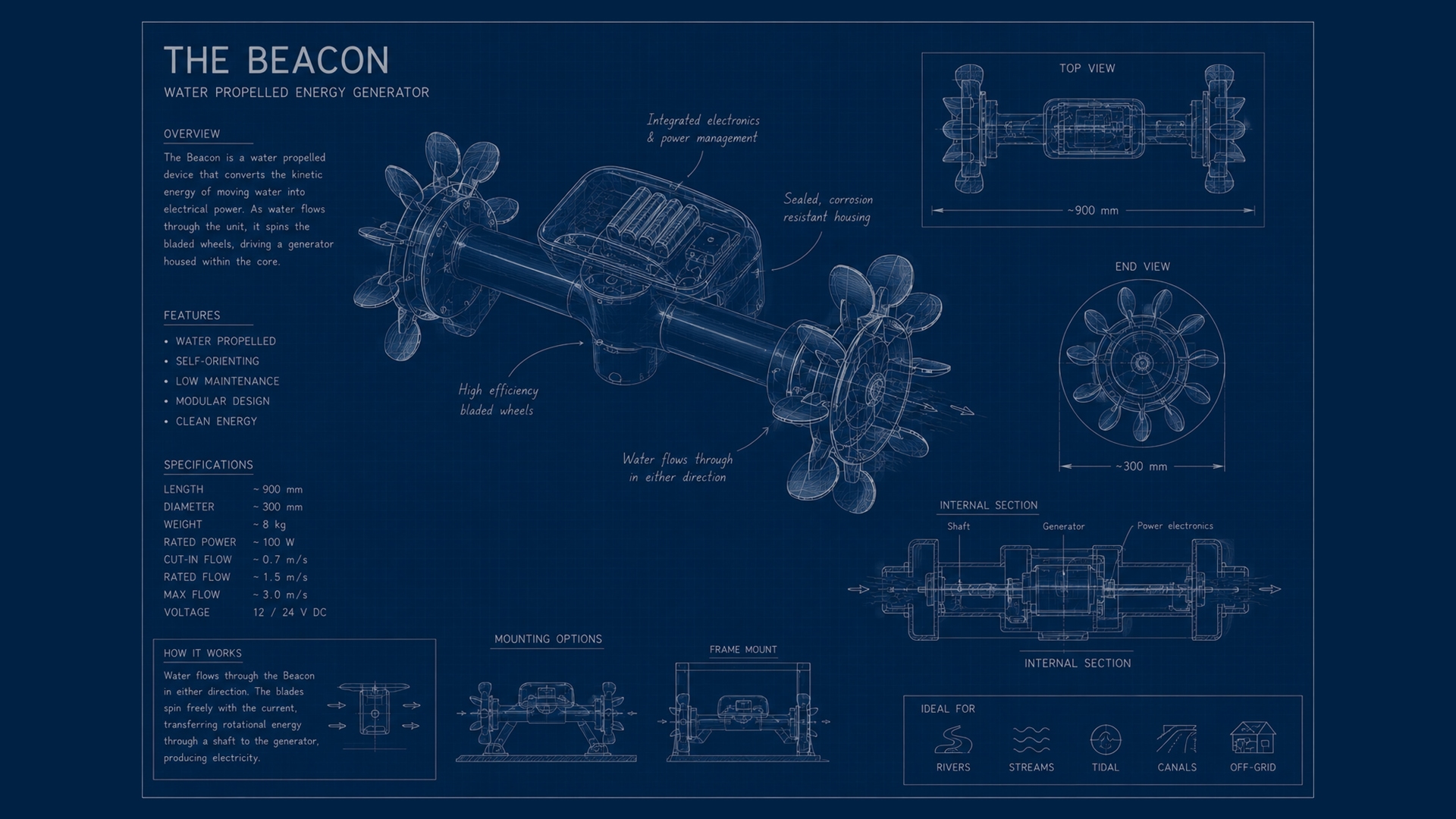
A 15-year-old girl from Florida, a pen pal from Ethiopia and an energy source that could change the world. Meet Hannah Herbst, the young genius behind “The Beacon.”
By The Foundation for a Better Life
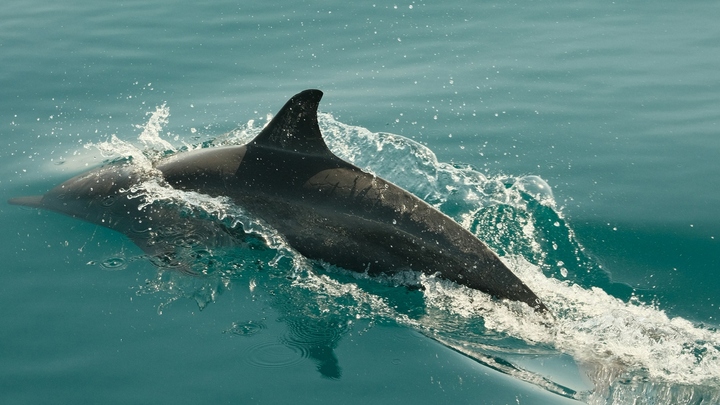
Florida. A boat. A sunny afternoon. Most 15-year-olds would be enjoying the sun and the surf. But as Hannah Herbst was boating through the Boca Raton Inlet, getting bounced around by the waves, she was thinking: “Why not use this power?”
She sensed the power of the sea, but didn’t yet know the mechanics of it – that a single 5-foot wave nearing the shore can generate nearly an hour’s worth of electricity for a small home. Not the typical boat ride musing for a high school girl.
But Herbst is by no means ordinary. She had been communicating with a pen pal in Ethiopia, where electricity is sparse. Equal access to power was on her mind.
In many parts of the world, electricity along the coast is nonexistent, or at least hard to access. One of the challenges for medical teams working in remote coastal areas is getting electricity to run basic medical equipment. An equally important challenge is clean drinking water. Making simple medical procedures available and eliminating waterborne illnesses will stop thousands of preventable deaths. As a secondary benefit, these small generators could be used to illuminate coastlines and aid in navigation. Seeing the waves concentrated in the inlet got Herbst’s mind working.
Without the big budgets of sponsored laboratories, Herbst went to work collecting recycled materials. She 3D-printed a propeller and mounted it inside a length of PVC pipe, then connected it to a hydroelectric generator. Herbst then took her invention into the waves to see if it worked. That first prototype was successful in powering LED lights. That proof of concept propelled her to improve on the design, adding pistons to more efficiently capture the energy being generated and a filter system that produces drinking water.
Herbst’s brainstorm led to a $25,000 prize from the 3M Young Scientist Challenge, a contest that gives young inventors a chance to develop their ideas. Herbst was thrilled. She could use some of the money to help her Ethiopian friend and, with the help of 3M, keep pushing her design forward.
Ten years after Herbst first had her Einsteinian epiphany, she is hard at work bringing The Beacon to as many communities as possible. For Herbst, it’s not about creating a business model; it’s about making a difference. When she was first awarded the 3M grant, talk about commodifying the invention swirled around her. But she was adamant.
“I’m going to open-source it,” she told Fast Company back in 2015. “Everybody in the world can have access to the materials list and the data I got – everything you need to make this device. I really want to help my pen pal. I can’t imagine a day without energy in my life.”
Positive Energy… PassItOn.com®
Copyright ©2026 The Foundation for a Better Life. All rights reserved. Available under a Creative Commons Attribution NonCommercial-NoDerivatives 4.0 License (international): https://creativecommons.org/licenses/by-nc-nd/4.0/

The Foundation for a Better Life, a 501(c)(3) non-profit organization, gives your newspaper permission to publish these stories in print and electronic media (excluding audio and video), provided the stories are published in their entirety, without modification and including the copyright notice. For any modification, permission must first be obtained from the Foundation by emailing media-relations@passiton.com. Thank you.
We add new stories each month. If you'd like to be notified when we publish new stories, enter your information below.