Photo by National Cancer Institute on Unsplash
Recognizing and Relieving Suffering.
How a young doctor survived a Nazi labor camp and went on to pioneer medical equipment and procedures that relieve the suffering of thousands of patients.
By The Foundation for a Better Life
In 1944, at the peak of Nazi rule in Eastern Europe, 22-year-old George Berci was one of millions of Jews enslaved in labor camps. As Berci dug trenches in the frigid Hungarian mountains, he knew that his shovel made him useful to the Nazis and saved his life.
With Jews forbidden to study medicine under Nazi rule, Berci had trained as an apprentice mechanical engineer rather than pursue his passion and become a doctor. When the war ended, though, he returned to his hometown in Hungary and began his medical training.
The horrors of the war had left George more resolute to alleviate suffering in the world. But the opposition was still present in Hungary in the form of communism, and Berci was the target of political attacks. He took a position as a surgeon at a hospital in Budapest, where he hoped he could be free enough to put all his effort into his career and pursue his ambitions as an innovator in medicine. But his country remained in a state of unrest, and the Hungarian Revolution erupted in October 1956.
Once again thrown into the wartime reality that citizens are expendable resources – cannon fodder – Berci could not be a passive participant, hoping for the chaos to pass. He had been an active participant in the resistance during WWII, forging documents and facilitating escapes for his fellow Jews. Now, he used his medical training to treat their wounds. He spent several days caring for wounded and dying protestors after state police opened fire on the city square. The effort was overwhelming, and having been a prisoner before, he was not eager to risk it again.
Berci fled to Australia, where he was free to innovate. Surgery at the time was highly invasive. Cutting a patient open, making repairs and stitching the incision back together required the body to overcome a lot of stress, and took months to heal properly. A new innovation at the time fascinated Berci: Television. Was it possible, Berci wondered, to develop a camera small enough to be inserted into the body, giving the doctor a look at a tumor or infected gall bladder? It would be far less invasive and dramatically reduce patient recovery times.
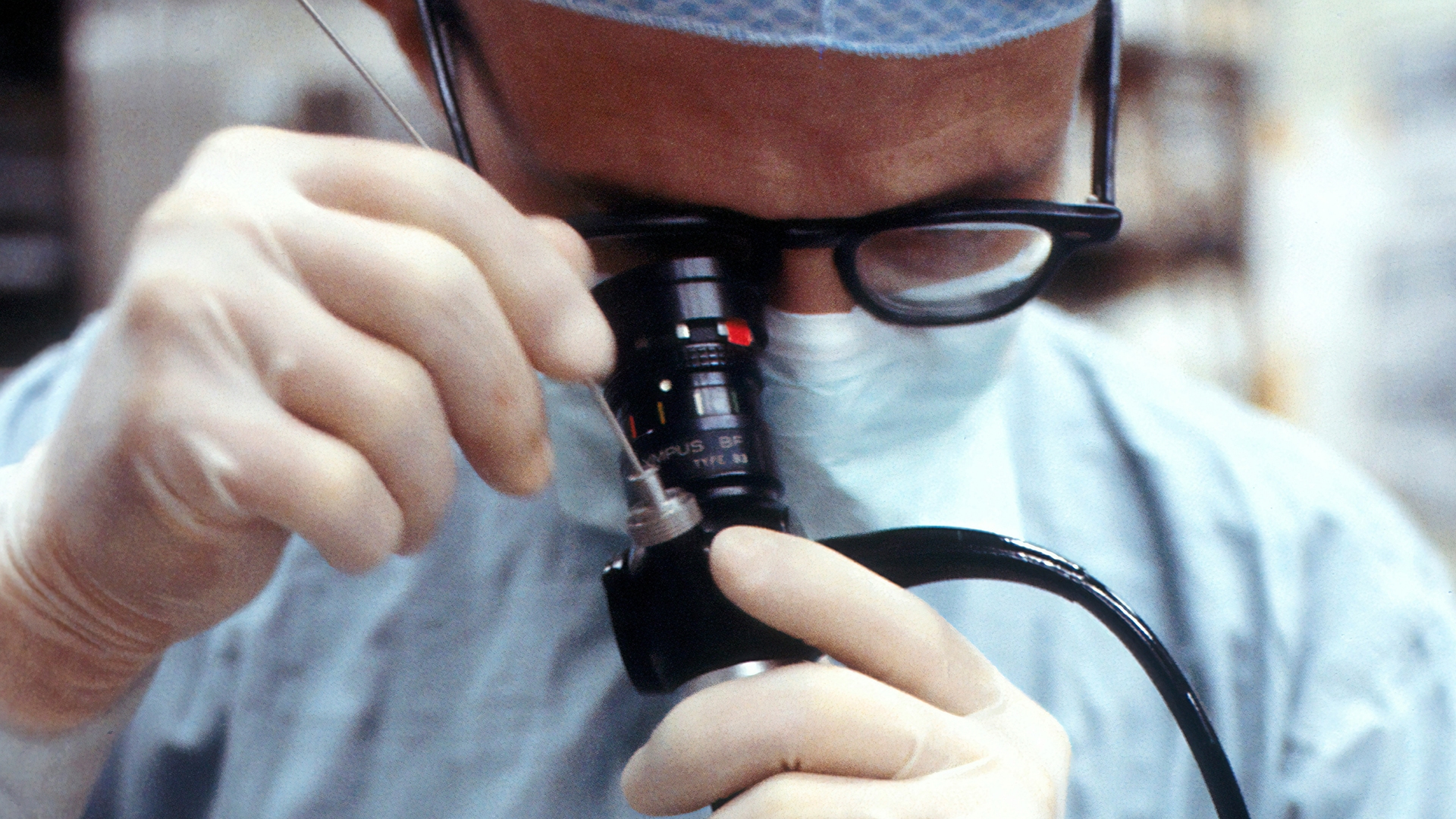
Blending his medical and engineering knowledge, Berci studied lens optics and magnification, systems that captured an image with a small camera and magnified it 200 times onto a TV screen. The result was the first laparoscope, which enabled far less invasive procedures that could be viewed by entire surgical teams and used in teaching. As scopes evolved, surgeons could locate and remove gallstones that were previously unseeable in one operation, where previously it often took multiple operations to find them all.
Berci also developed the innovation of colonoscopy, a procedure that has saved many thousands of lives thanks to its ability to find and remove dangerous polyps to prevent colorectal cancer.
Along the way, Berci provided for patient safety by training doctors and surgeons to use these tools appropriately.
The tools Berci developed are some of the greatest innovations in the medical industry. Still more important are the training programs he created so every doctor could have access to the knowledge they needed to use the tools Berci created. He believed that to do the most good, you have to share what makes a difference.
Compassion… PassItOn.com®
Copyright ©2026 The Foundation for a Better Life. All rights reserved. Available under a Creative Commons Attribution NonCommercial-NoDerivatives 4.0 License (international): https://creativecommons.org/licenses/by-nc-nd/4.0/

The Foundation for a Better Life, a 501(c)(3) non-profit organization, gives your newspaper permission to publish these stories in print and electronic media (excluding audio and video), provided the stories are published in their entirety, without modification and including the copyright notice. For any modification, permission must first be obtained from the Foundation by emailing media-relations@passiton.com. Thank you.
We add new stories each month. If you'd like to be notified when we publish new stories, enter your information below.